Trump pushes for AI data centers to fund local energy dividends
The President has called for hyperscalers to share excess power and financial gains with nearby residents to offset rising utility costs and secure community buy-in.
By Rahul Mehta ·
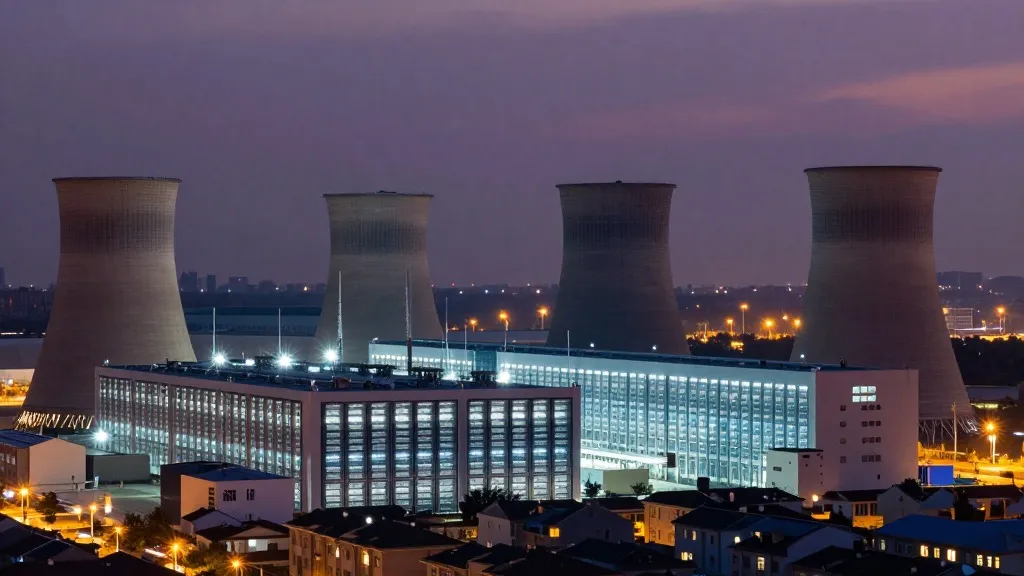
The expansion of artificial intelligence infrastructure has become a central point of tension between massive technology firms and the small towns hosting their operations. On October 21, 2026, President Donald Trump outlined a new framework requiring data center builders to provide financial and energy benefits to local communities.
In a post on Truth Social, the President articulated a mandate that goes beyond previous directives for these facilities to generate their own electricity. He stated that data centers must also give or sell their excess energy back to the surrounding community. The stated goal is to neutralize recent increases in local electricity rates or, ideally, drive prices down, making the presence of these large-scale facilities more acceptable to residents.
This move addresses a growing wave of protests across the United States, where communities have voiced concerns over the outsized footprint of AI data centers. Residents have cited rising utility bills, noise pollution, water shortages, air pollution, and deforestation as primary grievances. By demanding that companies return value to the areas they impact, the administration aims to mitigate these friction points while maintaining its aggressive timeline to outpace China in the AI sector.
The administration has previously ordered these corporations to produce their own power. Under the new proposal, any surplus generation could be leveraged to lower costs for locals. This aligns with a recently passed act that requires data centers to cover the expenses of grid upgrades, preventing those costs from being passed on to local taxpayers. The President suggested that such financial arrangements can transform previously unpopular projects into popular ones, urging companies to "MAKE DEALS" to accelerate construction.
However, the mechanics of this "dividend" remain undefined. In standard corporate finance, dividends are typically paid only to profitable entities. Given that new data center builds require significant upfront capital recovery, it is unclear how these projects will generate the surplus necessary to pay out dividends in the early years of operation.
Furthermore, the short-term power generation strategies employed by these centers often rely on gas-powered generators, which are frequently criticized for being noisy, polluting, and inefficient. Critics argue that if the local population is exposed to the negative externalities of these generators, the financial benefit of a dividend may not fully compensate for the quality-of-life impacts, particularly for those living in close proximity.
Whether this financial incentive is sufficient to win over skeptical communities is an open question. While the economic aspect is being addressed, other challenges such as enormous water consumption and ecological damage persist. These factors continue to make AI data centers a difficult sell in many locations, regardless of potential financial perks.
The administration’s strategy reflects a desire to stay ahead in the global AI race by smoothing the path for new construction. Yet, without specific regulatory requirements, observers note that companies may lack the incentive to go beyond the path of least resistance. The success of this initiative will depend on whether the promised energy sharing and financial deals translate into tangible, long-term benefits for the communities bearing the brunt of the expansion.
Source: Tom's Hardware