Tesla Owners Get Unsupervised Driving Only Within Robotaxi Limits by Mid-2027
Tesla has set a new timeline for hands-free driving in customer vehicles, but the feature will only function within specific, limited city zones.
By Valentina Cruz ·
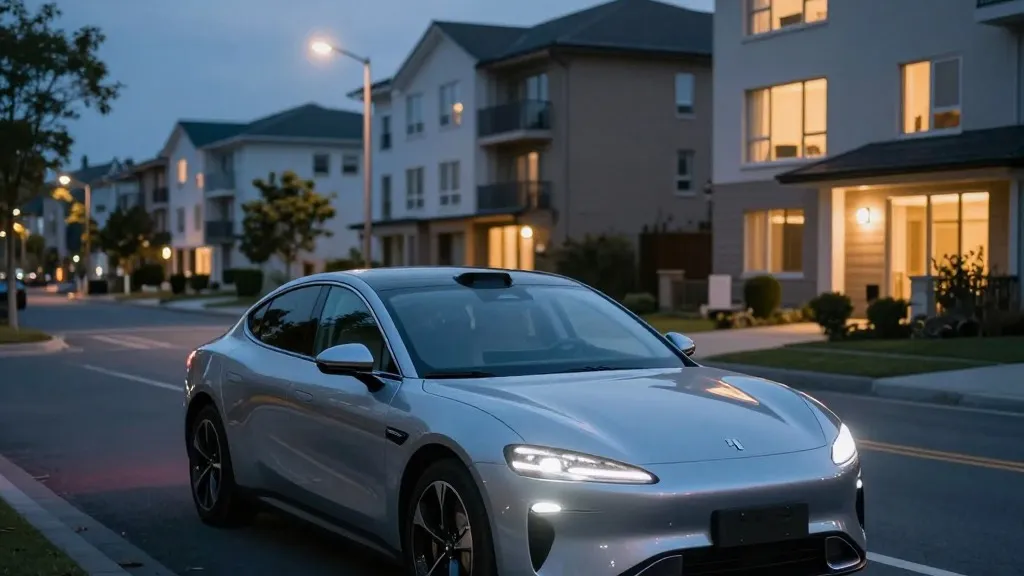
For Tesla owners who have paid for Full Self-Driving capabilities, the promise of a car that drives itself is moving closer, but with significant limitations. As of today, the company has officially targeted the second quarter of 2027 for the rollout of unsupervised driving features in privately owned vehicles. However, this update does not grant owners the freedom to drive anywhere in the country without supervision. Instead, the technology will initially be restricted to areas where Tesla’s existing Robotaxi service already operates, meaning the car can only drive itself autonomously within those specific, geofenced regions.
The first key detail is the operational scope of this new feature. During the Q3 2026 earnings call, AI chief Ashok Elluswamy clarified that the unsupervised mode works by integrating the owner’s vehicle into Tesla’s managed Robotaxi fleet. This means the car is not simply a personal vehicle with a software update; it becomes part of a networked system where Tesla manages the operation. For the average driver, this implies that the ability to sit in the back seat while the car navigates is currently confined to the same small pockets of cities where the company’s paid ride-hailing service is active.
The second major factor is the geographic restriction. Tesla’s Robotaxi service is currently active in six U.S. metropolitan areas, but the service areas are quite small. In cities like Miami, Orlando, and Tampa, the zones cover only specific strips or neighborhoods, often avoiding highways and complex urban environments. In the San Francisco Bay Area, the service is not even fully unsupervised because California regulations require a safety driver in every car unless specific data is released to the state DMV, a step Tesla has chosen to delay. Consequently, owners living outside these specific geofences will not be able to use the unsupervised feature for their daily commutes or long-distance trips.
Finally, the scale of the current fleet highlights the gap between the promise and the present reality. By the end of the third quarter of 2026, Tesla reported that its Robotaxi service had accumulated nearly two million unsupervised miles. While this is a significant milestone, third-party tracking indicates that only dozens of fully driverless Teslas are on the road, a number far smaller than the hundreds of thousands previously suggested by company leadership. Competitors like Waymo have already established a presence in some of these same cities, accumulating over three million miles in their own operations.
This development represents a shift in how the company defines its product for consumers. For the past decade, the sales pitch for Full Self-Driving has been a car that will eventually drive itself anywhere through a simple software update. However, the current plan narrows the scope to a service model where the car operates on Tesla’s terms within controlled zones. This stands in contrast to previous statements by CEO Elon Musk, who suggested in mid-2025 that unsupervised personal use would be available in certain geographies by the end of that year. Additionally, owners of older hardware versions have been informed that their vehicles cannot support unsupervised mode at all, with no clear upgrade path provided.
The company attributes the timing to safety bottlenecks. Elluswamy noted that safety remains the primary constraint, which is why the service is currently limited to low-speed routes and avoids difficult driving environments. While he expressed hope that these safety issues will be resolved by next year, he acknowledged that the exact timeline is uncertain. For buyers, this means that while the technology is progressing, the immediate benefit of unsupervised driving is a niche feature tied to specific locations rather than a universal capability for all Tesla owners.
Looking ahead, the focus for Tesla appears to be on expanding these zones and refining the safety data before rolling out the feature more broadly. The Q2 2027 target serves as a benchmark for when the first wave of customers in these pilot cities can expect to use the feature. Until then, the distinction between a personal vehicle and a fleet vehicle remains the central challenge in delivering the autonomous driving experience that has been promised to buyers for years.
Source: Electrek