ICC Operations Continue Amid New US Pressure
Court leadership asserts that investigations remain on track despite growing administrative and financial hurdles created by recent American sanctions.
By Robert Hayes ·
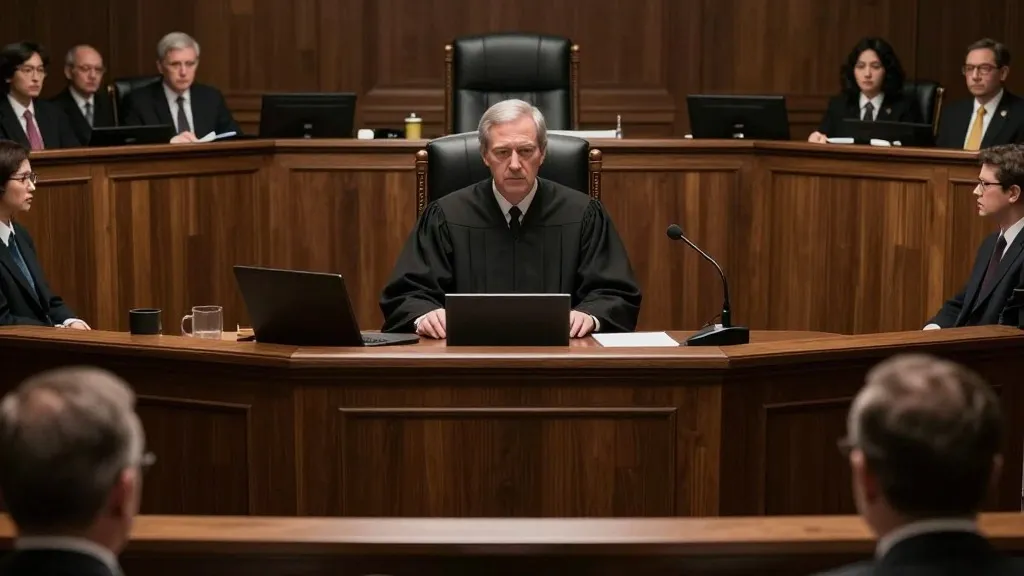
For the staff of the International Criminal Court, the daily reality has grown more complicated this week as new American financial restrictions begin to ripple through their personal lives. Although the formal enforcement of these measures is still several months away, employees are already reporting friction in their banking arrangements. This immediate impact comes against a backdrop of heightened geopolitical tension, with the US government explicitly targeting the institution it has labeled a rogue entity in recent months.
The situation was formalized on October 9 when US Secretary of State Marco Rubio announced the sanctions. He characterized the court as a frequent target of the current administration and issued a stark ultimatum: the court must either cease its threats or face termination. Rubio granted a six month window for negotiations, yet the specific criteria for a satisfactory resolution remain undefined. This lack of clarity has left the court operating under significant uncertainty regarding its future standing with Washington.
Nazhat Shameem Khan, who is currently co-running the prosecutor's office while a search for a new chief continues, maintains that the core mission remains intact. She reports that significant progress has been made in the investigation into the war in Gaza and other ongoing cases. This work has continued steadily since the issuance of arrest warrants in November 2024 for Israeli Prime Minister Benjamin Netanyahu and his former defense minister, Yoav Galant.
Khan clarified that the public silence on new charges regarding Gaza is procedural rather than indicative of stagnation. A ruling earlier this year mandated that all warrant applications and charges remain confidential until judges authorize their release. She noted that even if an investigation reaches a critical stage, the court may be unable to discuss it publicly, creating an illusion of inactivity that she assures is not the case.
The administrative challenges stem from what Khan describes as over-compliance by global banks. Financial institutions are tightening their protocols to minimize risk while the exact scope of the sanctions is debated. Despite the measures being aimed at the institution rather than individuals, staff members are experiencing direct difficulties. Khan, who has previously been targeted by US sanctions, remarked that life without a credit card is increasingly inconvenient for global travel and transactions.
To mitigate these external pressures, the court is actively insulating its operations. It is transitioning its software infrastructure from Microsoft to European alternatives and is in negotiations with service providers regarding banking and health insurance. Khan emphasized that no decisions have been made to reduce investigative capacity or output based on the sanctions, although the full impact will be difficult to predict until the measures take full effect.
The internal landscape is also shifting. Formal investigations into sexual harassment allegations against former chief prosecutor Karim Khan began in late 2024. The British jurist, who is unrelated to the current deputy, denied the charges and was removed from his position in July following a vote by member states. This internal review adds another layer of complexity to an already strained administrative environment.
Looking ahead, the court is seeking support from European partners. The registrar is currently negotiating with the European Union to explore options for blocking the sanctions or providing other forms of protection. In a show of solidarity, the European Parliament recently awarded the court and its officials the Sakharov prize for freedom of thought. Khan described this recognition as a vital message to the staff, affirming that the court remains a relevant avenue for justice for victims who have nowhere else to turn.
Source: The Guardian