France’s School Crisis Spills Into the Streets as Thousands Demand Change
A nationwide surge in protests highlights growing frustration over education and policing, forcing the government to deploy massive security forces to manage the unrest.
By Ahmed Mansour ·
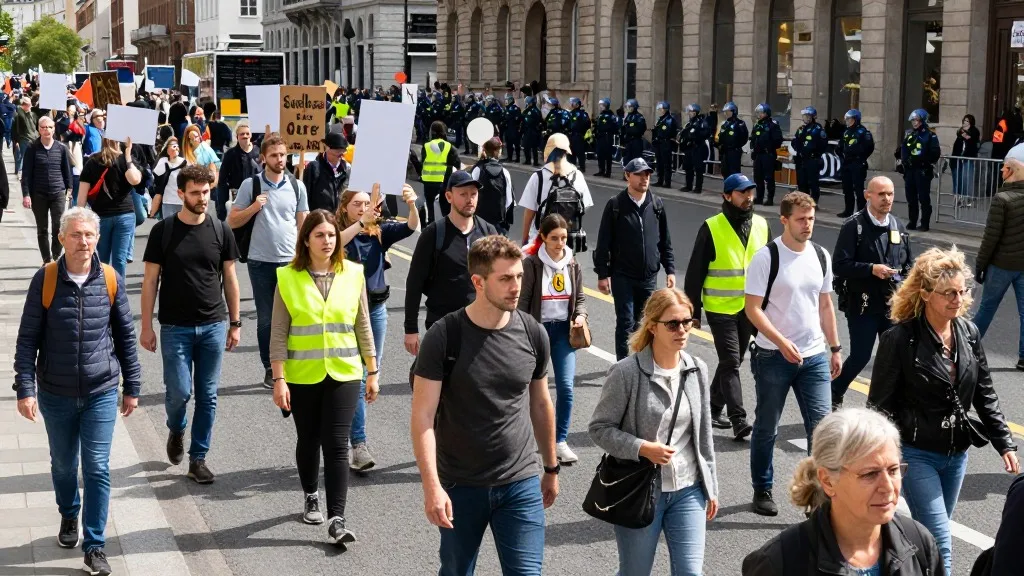
For residents across France, the recent weekend marked a significant shift in how public demonstrations are being handled. With hundreds of thousands taking to the streets, the focus has moved beyond simple student complaints to a broader social outcry. Ordinary citizens now face a more visible and intense security presence, with over 70,000 police officers deployed to manage the crowds. This heavy deployment has led to boarded-up shops, closed museums, and a heightened sense of tension in major urban centers, fundamentally altering the daily rhythm of life for many families and workers.
The core of the movement remains rooted in the education system. High school students originally began their protests in mid-September, citing critical staff shortages, crumbling infrastructure, and overcrowded classrooms where even basic furniture was missing. What started as a specific grievance among 15 to 18-year-olds has evolved into a major youth movement. Teachers, parents, and trade unions have joined the cause, creating a unified front that challenges the government’s handling of public services. The demand for more teachers and repaired buildings has become a symbol of wider economic and social struggles.
However, the mood on the ground was mixed. In Paris, at least 110,000 people marched in a largely relaxed atmosphere, with brass bands playing and families participating. Banners critical of the government’s tactics, such as 'Oppression breeds rebellion,' were common. Yet, the peace was not universal. At the end of the route in Paris, as well as in cities like Lyon, Lille, and Marseille, clashes erupted. Masked groups threw bottles and stones, prompting police to use teargas and water cannons. These incidents have fueled anger among participants who feel the response is disproportionate.
Political friction has also intensified. President Emmanuel Macron, who is in the final months of his term, faces criticism for banning non-union demonstrations he deems illegitimate and for keeping protesters away from city centers. Many demonstrators feel their democratic rights are being eroded. One student noted that France is increasingly living under an authoritarian regime, while a communications worker described the courage needed to protest after being teargassed just a week prior. The government estimates 400,000 people marched nationwide, though unions claim the number was double that.
The stakes are high as the crisis deepens. Police investigations are underway after some protesters were injured by explosive weaponry. The far-right National Rally party held a congress in Orléans, where thousands of anti-fascist protesters marched, chanting slogans against both President Macron and party leader Marine Le Pen. Security officials reported 135 arrests across the country, with various weapons confiscated from the crowds. As key figures from past movements like the gilets jaunes predict continued weekly protests, the government faces a challenging path forward in its final year.
The visual echoes of past protests are strong, with some demonstrators wearing yellow vests as a nod to the 2018 and 2019 anti-government movements. Leaders from that era argue that the government is afraid, pushing protesters to the edges of cities to distance them from power. For many marchers, from retired consultants to charity workers, the action is personal. They are preparing for future marches with protective clothing, signaling that this is not a one-day event but a sustained effort to force the government to listen to the demands of a frustrated populace.
Source: The Guardian